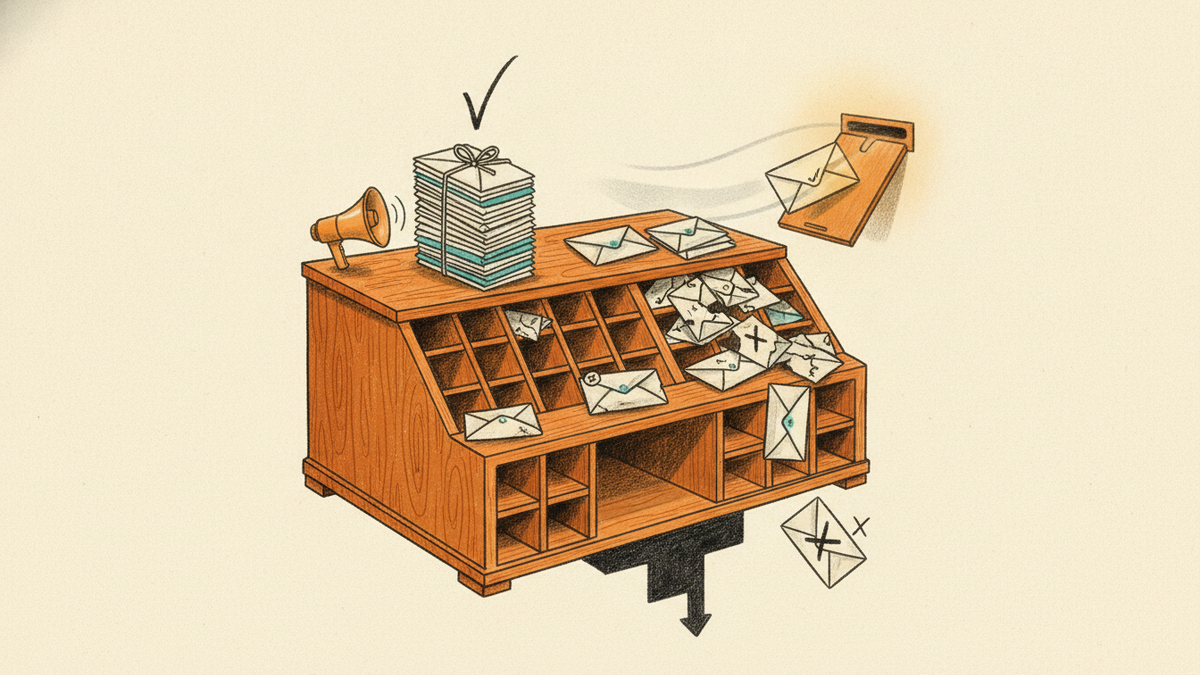
Think of your email sender reputation like a credit score. Instead of tracking how you handle debt, it tracks how responsibly you send emails. Internet Service Providers (ISPs) like Gmail, Outlook, and Yahoo use this score to decide if your emails should land in the inbox or get routed to the spam folder.
Every time you send a campaign from your Constant Contact account, ISPs are watching. They're building a profile tied to your sending domain (the part of your email address after the @). A good reputation means your messages get delivered. A bad one means they disappear into the junk folder, unseen.
Why your sender reputation matters
It all comes down to one word: deliverability. You can have the best subject line and the most compelling offer, but if your email doesn't reach the inbox, none of it matters.
ISPs have one primary goal: protect their users from spam. They use your sender reputation as a shortcut to judge whether you're a legitimate sender or a spammer. A low reputation score tells them you might be sending unwanted mail, so they filter your messages to protect their users. This is a core part of how to avoid the spam folder.
A strong reputation, on the other hand, gives ISPs confidence in your messages. It’s a green light that helps your campaigns reach their destination, which is the first and most critical step to improving your open rates.
What factors influence your sender reputation?
Your sender score isn't based on just one thing. It's a combination of different signals that ISPs track over time. Here are the most important ones.
Sending domain and IP history
When you use a service like Constant Contact, you're often sending from a shared IP address. This means you benefit from the platform's already-established reputation. However, your own sending domain (yourbusiness.com) has its own reputation, too. This is the part you directly control with your sending habits.
Engagement rates
This is a big one. ISPs watch to see if people are opening and clicking on your emails. High engagement signals that your subscribers want to hear from you. Low engagement (or worse, people deleting your emails without opening them) is a red flag that lowers your reputation. ISPs see it as a sign that your content isn't relevant to your audience.
Spam complaints
This is the most damaging factor. When a subscriber clicks the "mark as spam" button, it sends a direct, negative signal to their ISP. Even a very small number of spam complaints can have a big impact. A complaint rate of just 0.1% (1 complaint per 1,000 emails sent) is often considered too high and can get your reputation flagged.
List quality and hygiene
Sending emails to addresses that don't exist (a "hard bounce") is a major sign of a low-quality, outdated list. It suggests to ISPs that you might have bought your list or aren't managing it properly. Regularly cleaning your list to remove invalid emails and inactive subscribers is crucial for maintaining a healthy reputation.
Sending volume and consistency
ISPs prefer predictable sending patterns. A brand-new domain that suddenly starts blasting tens of thousands of emails looks very suspicious. It's better to start with a smaller volume and gradually increase it as you build a history of positive engagement. This "warm-up" process proves you're a legitimate sender, not a spammer trying to fly under the radar.
How to protect your sender reputation
Maintaining a good reputation isn't complicated. It’s about following a few fundamental best practices that all center on sending emails that people find valuable.
Build your list organically
Never, ever buy an email list. These lists are often filled with old addresses, fake emails, and even "spam traps", email addresses set up specifically to catch spammers. Only send to people who have explicitly given you permission to contact them. Use sign-up forms on your website, at your checkout, or in your physical store.
Use a double opt-in
When someone signs up, send them an automated confirmation email with a link they have to click to be added to your list. This proves the email address is valid and that the person truly wants to subscribe. It prevents typos in sign-up forms and stops bots or bad actors from adding junk email addresses to your list.
Keep your list clean
Don't be afraid to remove subscribers who aren't engaging with your emails. If someone hasn't opened one of your campaigns in a year, they are unlikely to start now. Sending to them only hurts your engagement metrics and, therefore, your reputation. Consider a re-engagement campaign to win them back, but be prepared to let them go if it doesn't work.
Send valuable, expected content
When people sign up for your list, be clear about what they'll receive and how often. Then, stick to that promise. If they signed up for weekly tips and you send them five sales pitches a day, you're going to get unsubscribes and spam complaints.
Make unsubscribing easy
It might seem counterintuitive, but a clear and easy-to-find unsubscribe link is your friend. If someone can't easily opt out, they are much more likely to just mark your email as spam. A spam complaint is far more damaging to your reputation than an unsubscribe. Don't hide the link in a tiny font or confusing colors.
Your sender reputation is an asset you build over time. It’s the direct result of having a clean list and a content strategy that serves your audience. Tools can help you spot potential issues, for instance you can Check your email's spam score before sending. But the best way to protect your reputation is simple: send great emails that people look forward to receiving.