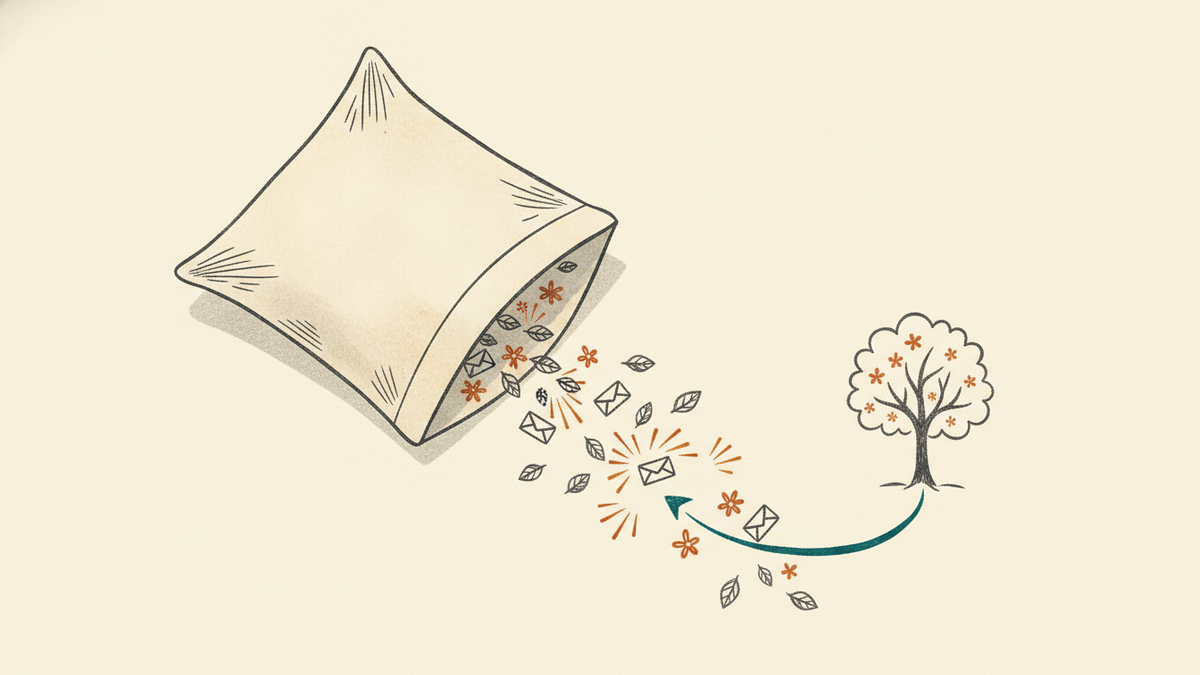
You don't need a marketing department to do this
Email marketing feels like a big deal. It sounds like something for companies with departments and budgets. But for a small business, it's one of the most effective things you can do. And it doesn't have to be complicated.
This is email for the owner who is also the cashier, the marketer, and the janitor. It’s about starting small, being useful, and building a real connection with the people who keep your business alive.
First, get some people to email
You can't have email marketing without an email list. The good news is you don't need thousands of people to make it work. A small list of interested customers is far more valuable than a huge list of strangers.
Start with who you already know. Don't overthink it or wait for the perfect website widget.
How to get your first subscribers
- Ask at the counter. Have a clipboard or a simple card where customers can write their email address for news and special offers. It's that simple.
- Put a form on your website. Your website platform has a way to add a signup form. Just ask for an email address. Promise not to spam them, and then keep that promise.
- Use your social media. Post a link to your email signup form. Let your followers know that email subscribers get the news first or receive special discounts. It gives them a reason to sign up.
Starting your list from scratch can feel daunting, but it's the most important first step. Focus on getting those first hundred people who actually want to hear from you.
Your first email: the welcome message
Someone trusts you with their email address. Don't leave them hanging. The very first email you send—the welcome email—is your chance to make a great first impression. In fact, it will probably be one of the most-opened emails you ever send.
It doesn't have to be long or clever. It just needs to do three things:
- Say "welcome" and confirm they're signed up. This reassures them the form worked.
- Set expectations. Tell them what kind of emails you'll be sending and how often. Once a week? Twice a month? Let them know.
- Give a little something. It could be a 10% off coupon, a link to a helpful video, or just your most popular product. It's a small thank-you for signing up.
Get this one right, and you've started the relationship on the right foot. You can paste a simple welcome message right into your Constant Contact account and set it to send automatically.
Find a simple, consistent rhythm
The biggest mistake small businesses make with email is inconsistency. They send five emails in one week for a big sale, and then nothing for three months. That trains your audience to ignore you.
Consistency is more important than brilliance. A simple, helpful email once a week is better than a masterpiece once a year.
The 'one email a week' plan
What could you possibly talk about every week? More than you think.
Don’t try to write a corporate newsletter. Just share a small piece of your world. Think of it as a mini-update, not a giant production.
Here are some ideas that take 15 minutes to write:
- A photo of a new product that just arrived.
- A quick story about a happy customer (ask their permission!).
- A tip on how to get more value out of your product or service.
- A simple "Happy Friday" with a picture of your shop dog.
- A heads-up about an upcoming sale or event.
Keep it short. Write like you talk. The goal is to be a welcome guest in their inbox, not an intruder.
Keep it human, keep it helpful
There are a lot of rules in email marketing, but most of them boil down to this: don't be annoying.
- Never, ever buy an email list. It's a waste of money and a great way to get your account flagged for spam.
- Write to one person. Even when you're sending to 500, write as if you're emailing a single, friendly customer.
- Have a point. Every email should have a purpose. What do you want the reader to do? Buy now? Read a blog post? Visit your store? Make it clear.
- Make it easy to unsubscribe. If someone wants to leave, let them. Hiding the unsubscribe link is a bad look and it will hurt your deliverability in the long run.
Think about the emails you actually open. They're from brands you trust, they provide some kind of value, and they respect your time. Be that kind of emailer.