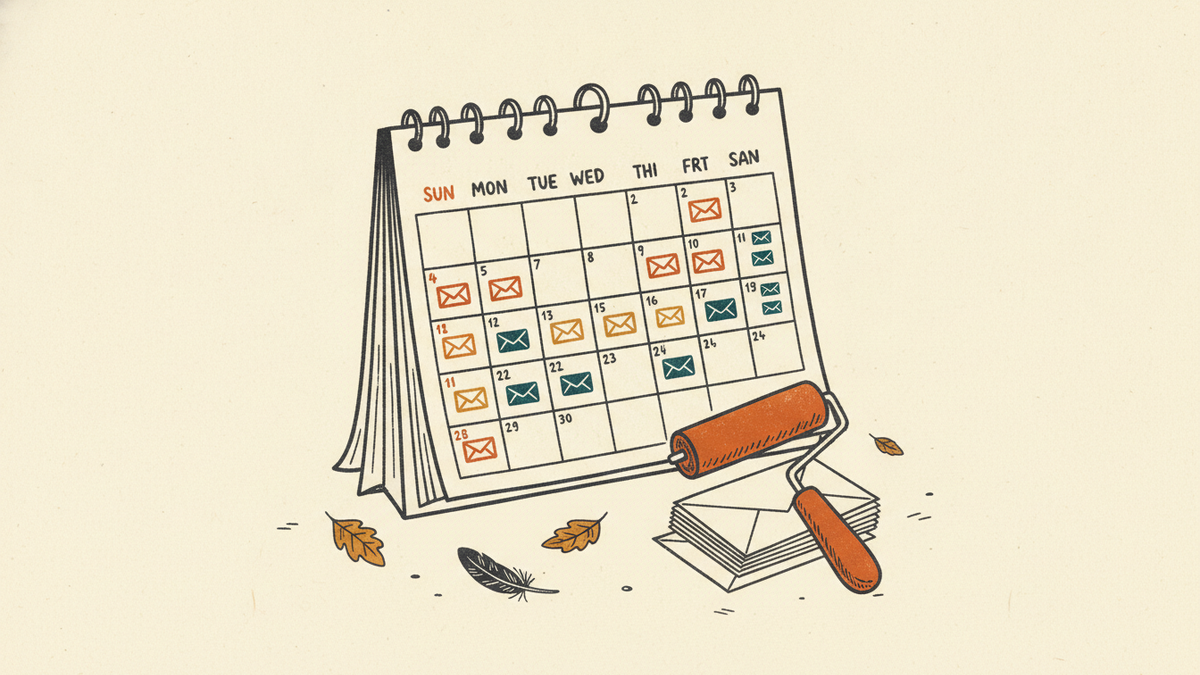
Figuring out how often to email your subscribers can feel like a guessing game. Send too many emails, and you annoy your list. Send too few, and you're leaving money on the table.
So what’s the right answer? It’s not about finding one magic number. The best email frequency depends on your audience, your industry, and the type of content you're sending. This article offers a simple framework to help you find the sweet spot for your business.
Start with your subscribers' expectations
The most important factor in email frequency is what your subscribers expect. When someone signs up for your list, they have an idea of what they're getting into. If you promised weekly tips, sending daily emails is a quick way to get unsubscribes.
If you don't explicitly state your sending frequency on your signup form (which you should), the reason they signed up is your next best clue.
- Newsletter signups: People who sign up for a newsletter generally expect a consistent schedule, like weekly or bi-weekly.
- Lead magnets (e.g., a free guide): These subscribers expect to get the resource they requested, followed by a welcome series. After that, you need to set a new expectation.
- Purchases or free trial signups: These are transactional emails first. They expect receipts, shipping notifications, and onboarding tips. You can introduce them to your regular marketing emails, but give them a clear option to opt out.
When in doubt, start with a lower frequency (once a week is a safe bet for most) and see how your audience responds.
How to measure engagement
Your email metrics will tell you if your frequency is working. Keep an eye on these numbers in your Constant Contact account every time you send a campaign.
Open and click-through rates
These are your most direct feedback loops. If your open and click rates are high, your subscribers are clearly interested in what you're sending. If you see a steady decline as you increase your sending frequency, that's a sign you're pushing the limit.
Our playbook on increasing open rates offers more strategies for keeping your audience engaged.
Unsubscribe rate
A rising unsubscribe rate is a major red flag. A small number of unsubscribes with every send is normal, but a sudden spike means you're sending too often or your content isn't hitting the mark.
Spam complaints
This is the ultimate danger sign. If subscribers are marking your emails as spam, it hurts your sender reputation and makes it harder for everyone on your list to get your emails. If you see spam complaints climb, you need to pull back on frequency immediately.
Segment your audience for better results
Not everyone on your list is the same. Instead of a one-size-fits-all approach, you can send more relevant emails by segmenting your list. This allows you to adjust frequency based on how engaged different groups are.
Create an engaged segment
Create a group of your most active subscribers. These are the people who have opened or clicked on an email in the last 30-60 days. This group might appreciate hearing from you more often. You could send them special offers, early access, or behind-the-scenes content.
Create a "fading" segment
Identify subscribers who haven't engaged in the past 90 days. Sending to this group less frequently, maybe once a month with your best content, is a good way to stay top-of-mind without being a pest. You might also send them a re-engagement campaign to try and win them back.
Using segmentation helps you send more emails to the people who want them and fewer to those who don't. It's a simple way to get more results without burning out your whole list.
Finding your baseline frequency
If you're starting from scratch, it can be tough to know where to begin. Use these as general guidelines and adjust based on your own results.
- For B2C (e-commerce, retail): 2-4 emails per week is common. The purchase cycle is shorter, and customers are used to hearing about promotions and new products regularly.
- For B2B (software, services): 1-2 emails per week is often a good starting point. The focus is more on providing value, building trust, and educating leads over a longer sales cycle.
- For newsletters and content creators: 1 email per week is standard. Consistency is key. Your readers build a habit around receiving your content on a specific day.
You can also give subscribers a choice. In your email preference center, let them choose if they want to get emails daily, weekly, or only for major announcements. This puts them in control and leads to a healthier, more engaged list.
Need some fresh ideas for your next newsletter? Try our Newsletter Idea Generator to get some inspiration.
Test and refine
Finding the perfect email frequency isn't a one-time task. It's something you should revisit regularly.
A simple way to test is to take a small portion of your list and try a different frequency for a few weeks. For example, if you normally send once a week, try sending twice a week to 10% of your subscribers. Does engagement drop, or do you get more clicks and sales? Let the data guide you.
Running an A/B test is another smart option. Many email platforms, including Constant Contact, have features for this. You could test two different frequencies and see which one performs better over a set period.
Don't forget to consider send times. Sending at the right time of day can have just as much impact as sending on the right day. Our Send Time Optimizer can help you find the best windows for your audience.
The goal is to find a rhythm that works for both you and your subscribers. It should be a schedule you can realistically maintain without sacrificing quality. Start slow, pay attention to your metrics, and don't be afraid to adjust. Your subscribers will thank you for it.