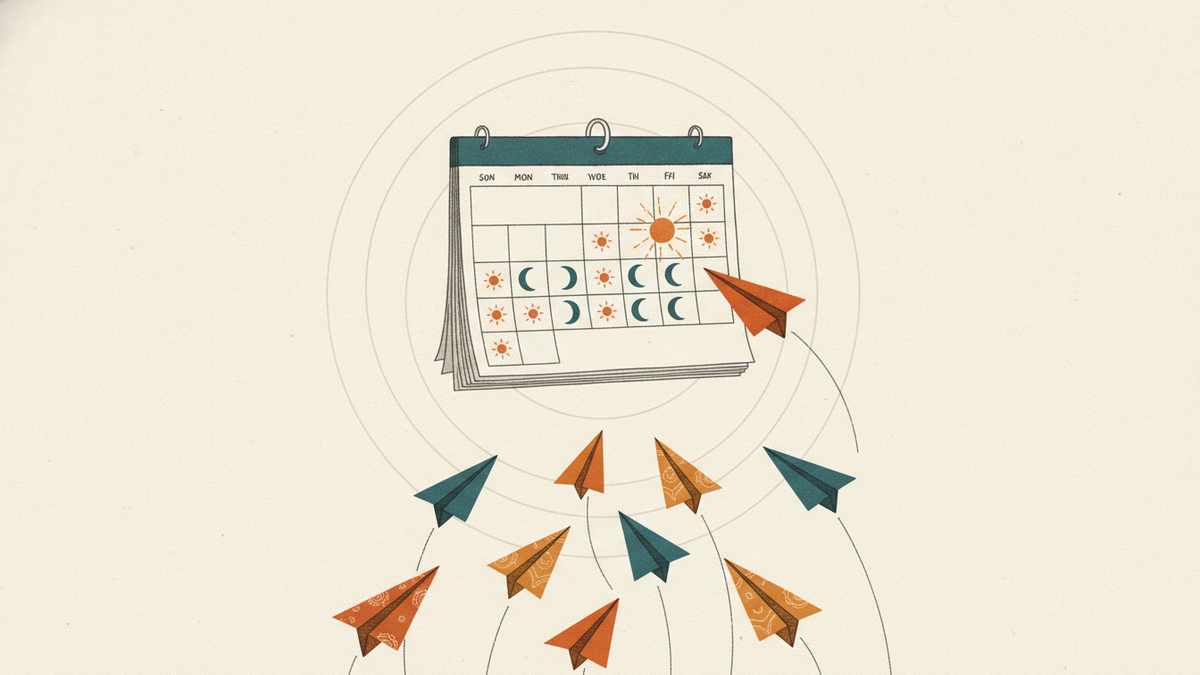
There’s no single ‘best time’ to send an email
There is no perfect time to send every marketing email. Your ideal schedule depends on your audience and what you’re sending.
Sending your email at "Tuesday at 10 a.m." just adds to the noise in an already crowded inbox.
The goal isn’t just getting more opens. You want to reach people when they’ll actually read your message and take you up on your offer.
Forget the old rules
So why did “mid-week, mid-morning” get so popular? The advice was based on a typical 9-to-5 office worker.
- Mondays were for catching up on a flood of emails.
- Fridays were for winding down with less attention.
That thinking is out of date. Today’s workforce includes remote employees, freelancers, and customers in different time zones.
A software brand selling to other businesses has a very different audience than a clothing store. Their best send times will be different, too.
How to find your best send time
Forget what others say and look at your own audience’s behavior. Here are four steps to find the right send schedule for your business.
1. Look at your past campaigns
Your Constant Contact account has all the data you need for improving your open rates. Check your last 10–15 campaigns to find trends.
Map out your open and click rates by day and time. Do you see any clear peaks in engagement?
Don’t stop at opens. Clicks and sales are what really matter. You might find that evening emails get fewer opens but more sales from people who have time to browse.
2. A/B test your schedule
Once you spot a few good times, you can test them. A simple A/B test is the best way to find a winner.
- Start with a theory. For example: “An email sent at 6 p.m. on Wednesday will get more clicks than one sent at 10 a.m.”
- Split your list. Create two equal, random groups from a portion of your subscribers.
- Run the test. Send the exact same email to both groups—just at your two different test times.
- Check the results. After 24–48 hours, see which version had a higher click or conversion rate. The winner is your better time slot.
You can test weekdays against weekends or mornings against evenings. Running these tests regularly will give you a clear picture.
3. Match the time to the message
The right time also depends on the email’s content. An invitation to a business webinar will likely do best during the workday.
A flash sale on new sneakers, on the other hand, might perform great on a Saturday morning.
Think about the context for your readers. A long newsletter is great for a lunch break. An urgent sale needs to land when people can act right away.
4. Use smart tools to plan
Some email platforms offer "send time optimization" features that try to deliver your campaign when each subscriber is most likely to see it.
These tools can help you skip the guesswork. For important sends, you can also use a free Send Time Optimizer tool to model audience behavior before scheduling anything in your Constant Contact account.
It’s a process, not a one-time fix
Finding the best time to send emails isn’t something you figure out just once. It’s an ongoing cycle of analyzing your results, testing new ideas, and learning.
As your audience evolves, their habits will, too. Your send schedule should be ready to adapt with them.
Stop looking for a universal answer. The real key is to test and analyze your own results to find the send times that work for your business.